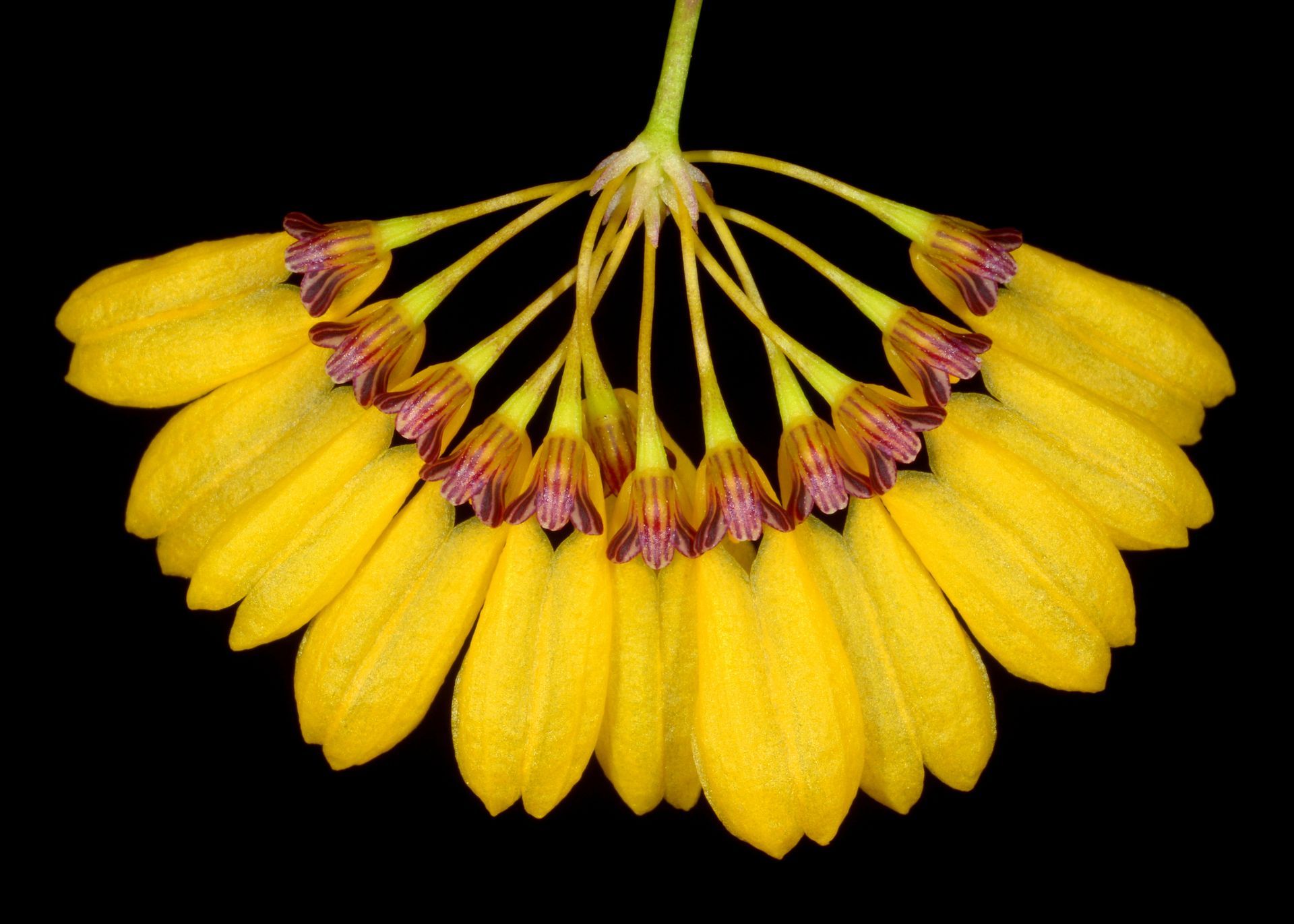
Bulbophyllum scaberulum

March 10, 2021

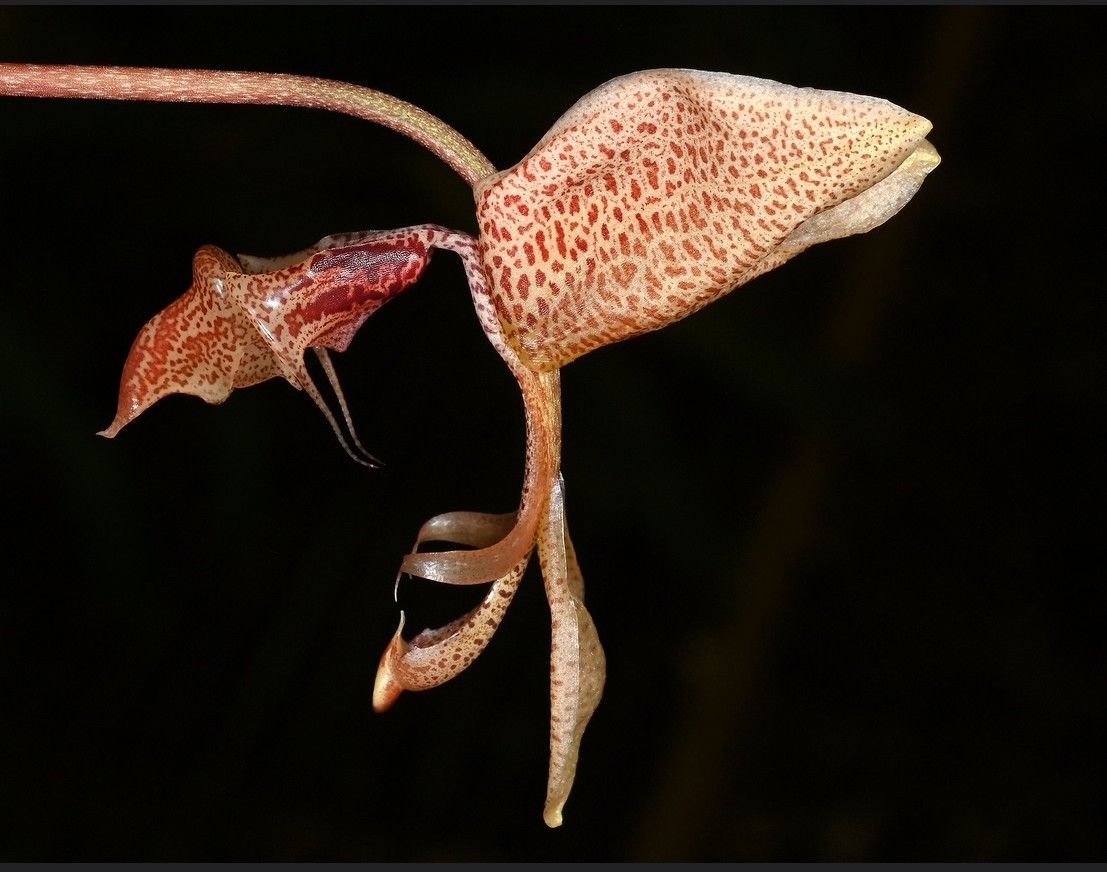
Bulbophyllum scaberulum
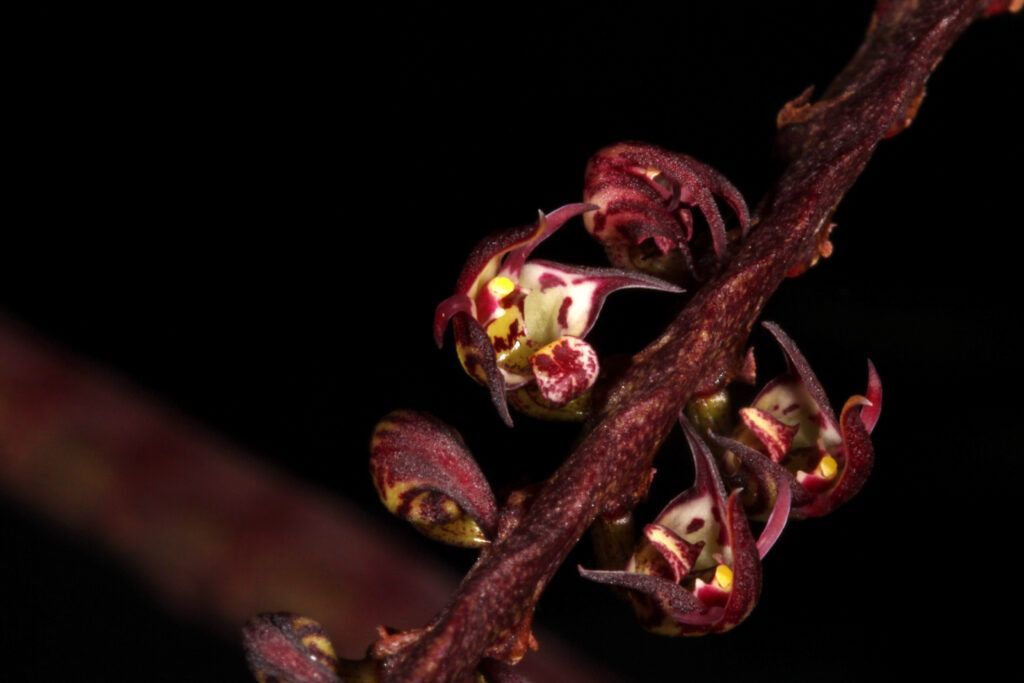


Bulbophyllum scaberulum
Photographer: John Varigos

A widespread African species found in most of the countries of central and South Africa. It is a creeping epiphytic or occasionally lithophytic and found at 100 to 1800 meters (350 to 5,900 feet). The plants usually grow in riverside forests. It has many flowers per inflorescence and the flowers are fleshy and do not open fully. The plant is usually about 37 cm (15 inches) tall.

Progeny: None

Awards: Four AOS awards:
Two CBRS, one HCC, and on Certificate of Cultural Merit when it 110 flowers and 20 buds on 130 inflorescences. It was last awarded in 2016.

Culture: Charles Baker (www.orchidculture.com)
Light: Light should be filtered or diffused, with strong air movement at all times. The species seems to require less light than most other bulbophyllums.


Temperatures: Daytime: average 24 to 26°C (76 to 78°F) and Night: 15 to 17°C (50 to 62°F). Because of the range in distribution and habitat elevation, the plants may adapt to temperatures as much as 10°F warmer or cooler.
Humidity: 80%. Do not allow to dry out completely. Growing conditions should be maintained throughout the year. Water may be reduced somewhat in the winter and again in late summer and early autumn.


Fertilizer: ¼ to ½ recommended strength applied weekly when plants are actively growing.

Plants may be mounted with a pad of sphagnum moss under the pseudobulb to hold a little additional moisture. If potted, grow in very shallow pots or baskets using an open, fast-draining medium. Plants may sometimes sulk for a year of so after being divided or repotted, so only repot when necessary. It is best to repot when a flush of new root growth is just starting.

The post Bulbophyllum scaberulum appeared first on Orchid Digest.
By Sandra Svoboda February 11, 2026
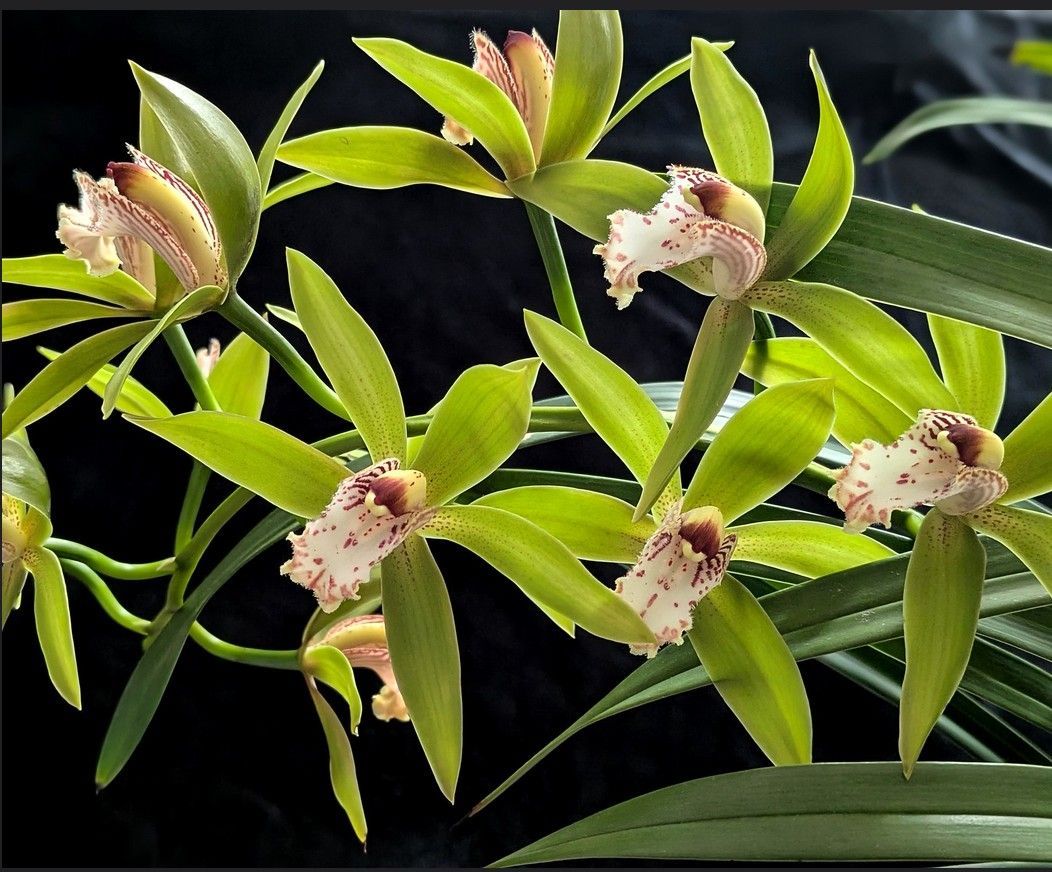
Bulbophyllum comosum is found from Myanmar to Thailand at elevations of 1,850 to 2,000 meters (6,070 to 6,562 feet) as a small-sized, cool-growing epiphyte. It is deciduous, and the leaves fall just before blooming, which occurs in the winter with fragrant (cinnamon) flowers. Photographer: Ron Parsons (www.flickr.com/photos/rpflowershots Grower: John Leathers Info: Internet Orchid Species Photo Encyclopedia www.orchidspecies.com
By Sandra Svoboda February 5, 2026
Dresslerella is a genus that has 14 species accepted according to the Kew Plants of the World Online. Dresslerella lasiocampa is endemic to Ecuador at elevations of 1,500 to 1,800 meters (4,921 to 5,906 feet) as a miniature-sized, cool-growing epiphyte that blooms in the spring. It grows on the trunks of old trees with full exposure to the sun. This is possibly the most widely cultivated species in the genus. Grow mounted with Sphagnum moss around the roots. Keep moist, well-drained, but not wet. Photographer: Ron Parsons (www.flickr.com/photos/rpflowershots Grower: John Leathers Info: “A Compendium of Miniature Orchid Species: by Parsons & Gerritsen, p. 784
By Sandra Svoboda February 1, 2026
Lepanthes felis is endemic to Colombia in cloud forests at elevations of 1,900 to 2,500 meters (6,234 to 8,202 feet) as a miniature-sized, cool- to cold-growing epiphyte that blooms in the late spring and summer. This species needs high humidity, constant watering, and fertilizer. Lepanthes felis readily produces keikis on the inflorescence. Photographer: Ron Parsons (www.flickr.com/photos/rpflowershots Grower: Doug Kubo and Ron Parsons Info: Internet Orchid Species Photo Encyclopedia www.orchidspecies.com
By Sandra Svoboda January 29, 2026
Maxillaria pseudoneglecta is found in Costa Rica and western Panama in premontane and montane forests at elevations above 900 meters (2,953 feet) as a small-sized, warm- to cool-growing epiphyte that blooms in the late spring through fall. Photographer: Ron Parsons (www.flickr.com/photos/rpflowershots Grower: Andy’s Orchids (andysorchids.com) Info: Internet Orchid Species Photo Encyclopedia www.orchidspecies.com
By Sandra Svoboda January 27, 2026
Dendrobium rigidum is found in Australia and New Guinea. Plants usually grow on mangroves in swampy coastal lowlands in New Guinea and commonly grow in mangrove swamps but are also found on trees along creeks and on rock faces and ironbark trees in low mountains and dry savannas, sometimes considerably inland from the coast in Australia. They grow from sea level to 2,300 feet (0 to 700 meters). It blooms sporadically during the year and usually blooms several times, with the main flowering in spring. It is a very slow-growing species. It is best grown mounted, but it can be in a shallow bulb pan or hanging basket. Do not use sphagnum moss. Air movement is critical. Repot in the spring. Photo: Ron Parsons (www.flickr.com/photos/rpflowershots Grower: John Snyder Info: Charles Baker culture sheet www.orchidculture.com
By Sandra Svoboda January 24, 2026
Coelogyne usitana is endemic to the Philippines at elevations around 800 meters (2,625 feet) as a small- to medium-sized, hot to warm growing epiphyte or lithophyte that blooms at any time of the year but mostly from spring to summer. It has received 15 AOS awards, including an FCC. Photo: Ron Parsons (www.flickr.com/photos/rpflowershots Grower: Brookside Orchids and Cindy Hill Info: Internet Orchid Species Photo Encyclopedia www.orchidspecies.com
By Sandra Svoboda January 22, 2026
Platystele repens 'Joan' CCE/AOS is found in Belize and Guatemala in lowland forests at elevations of 300 to 1,000 meters (984 to 3,281 feet) as a miniature-sized, hot- to warm-growing epiphyte that blooms in the summer and fall. It should be placed in small pots and kept moist with steady watering throughout the year. Photo: Ron Parsons (www.flickr.com/photos/rpflowershots Grower: Mary Gerritsen Info: Internet Orchid Species Photo Encyclopedia www.orchidspecies.com
By Sandra Svoboda January 21, 2026
Dendrobium annae is found from Sumatra to Java, a medium- to giant-sized, hot- to warm-growing epiphyte blooms in the fall with short-lived flowers. Use a quick-draining medium. Let it get slightly dry in the winter, but not a complete winter rest. Photo: Ron Parsons (www.flickr.com/photos/rpflowershots Grower: Hanging Gardens Info: Internet Orchid Species Photo Encyclopedia www.orchidspecies.com
By Sandra Svoboda January 13, 2026
Aerides magnifica is endemic to the Philippines at elevations up to 300 meters as a medium-sized, hot-growing epiphyte that blooms in the late summer and early fall with sweetly scented flowers. Provide it with bright, indirect light (near full sun is tolerated), warm temperatures, high humidity, and excellent air movement. Photo: Ron Parsons Grower: Brookside Orchids Info: Internet Orchid Species Photo Encyclopedia www.orchidspecies.com
By Sandra Svoboda January 11, 2026
The body content of your post goes here. To edit this text, click on it and delete this default text and start typing your own or paste your own from a different source.