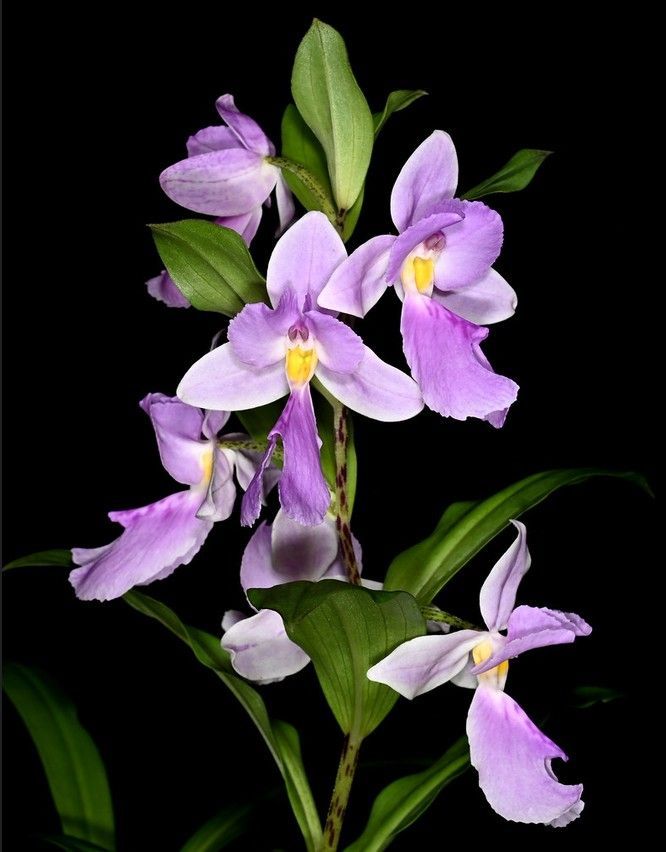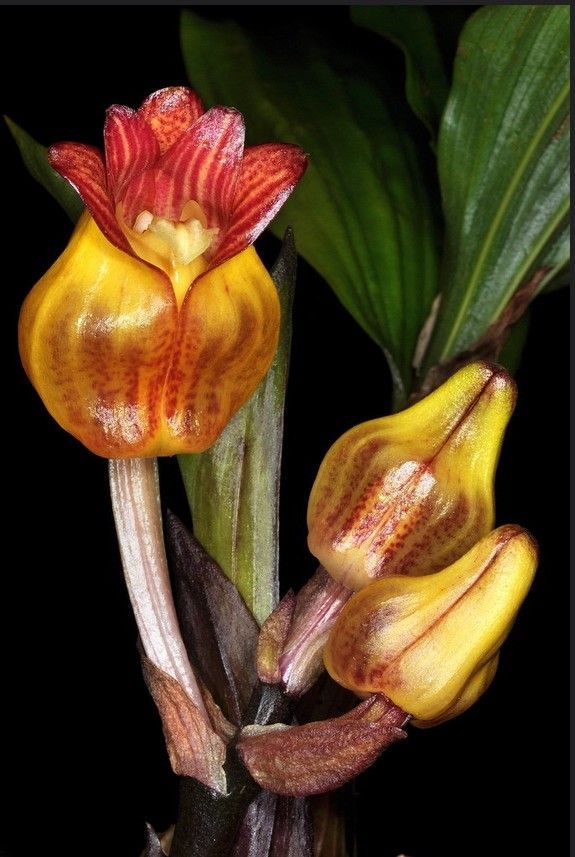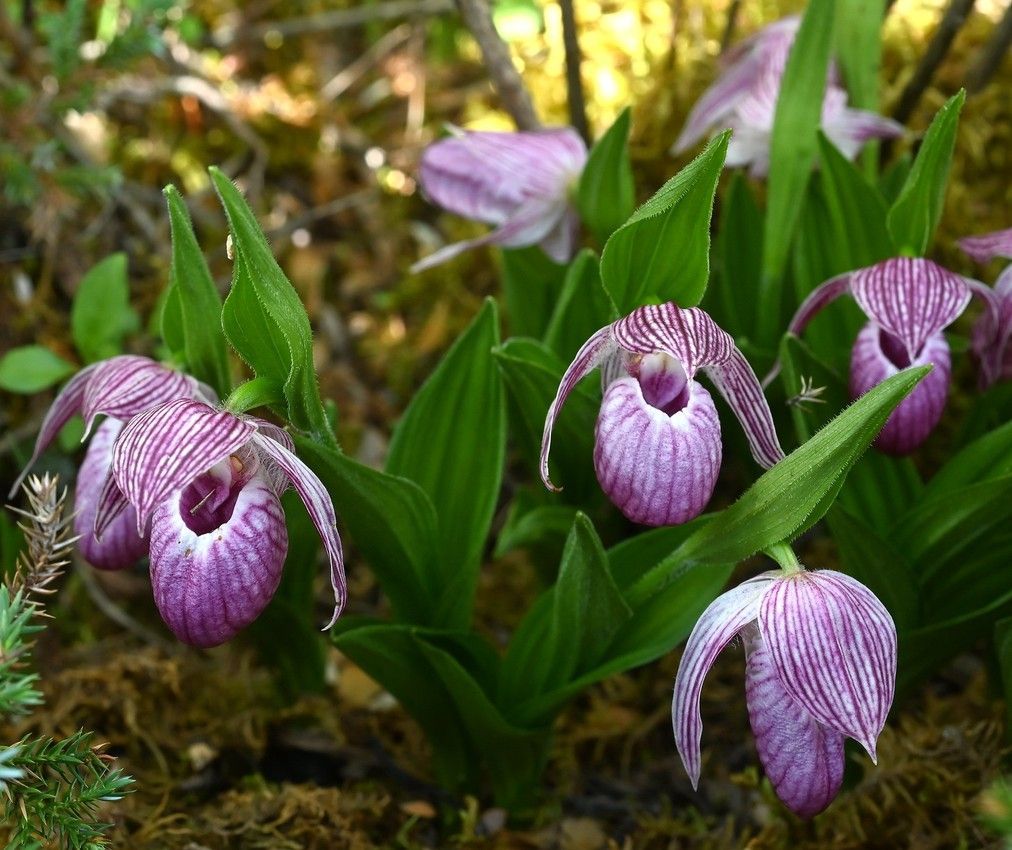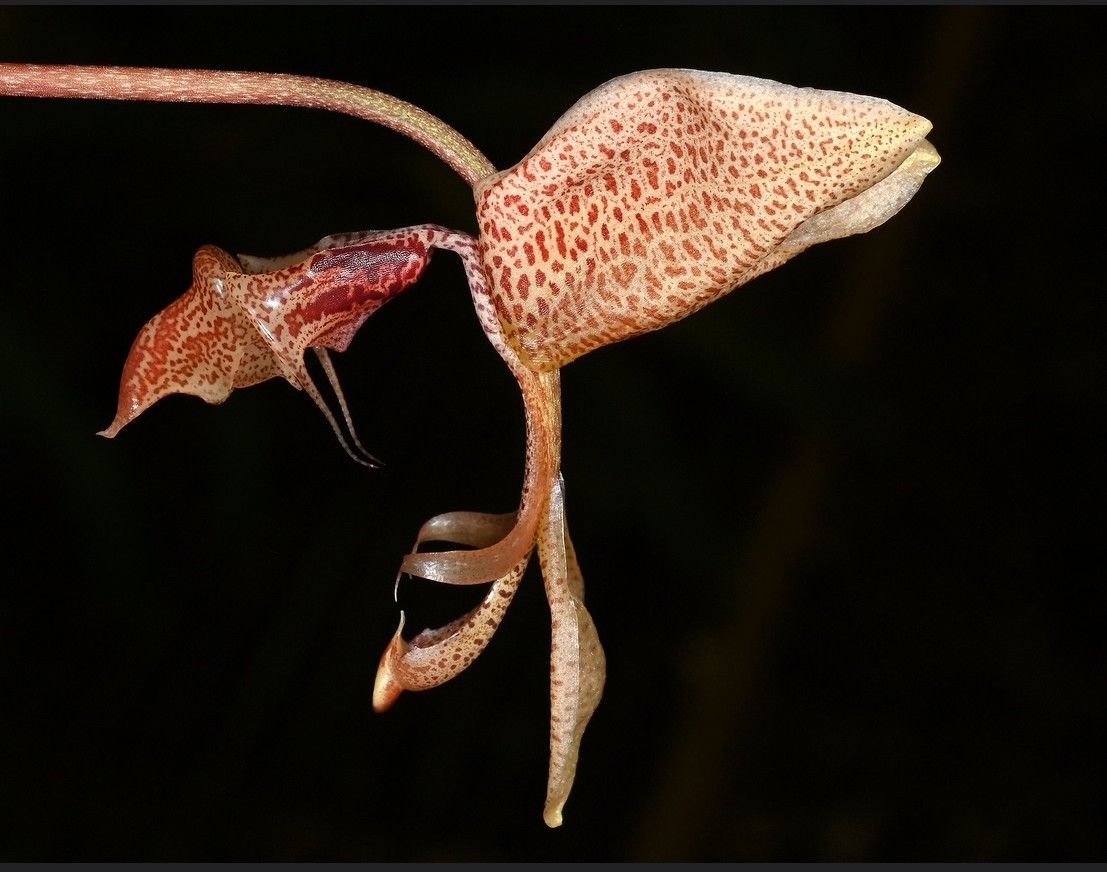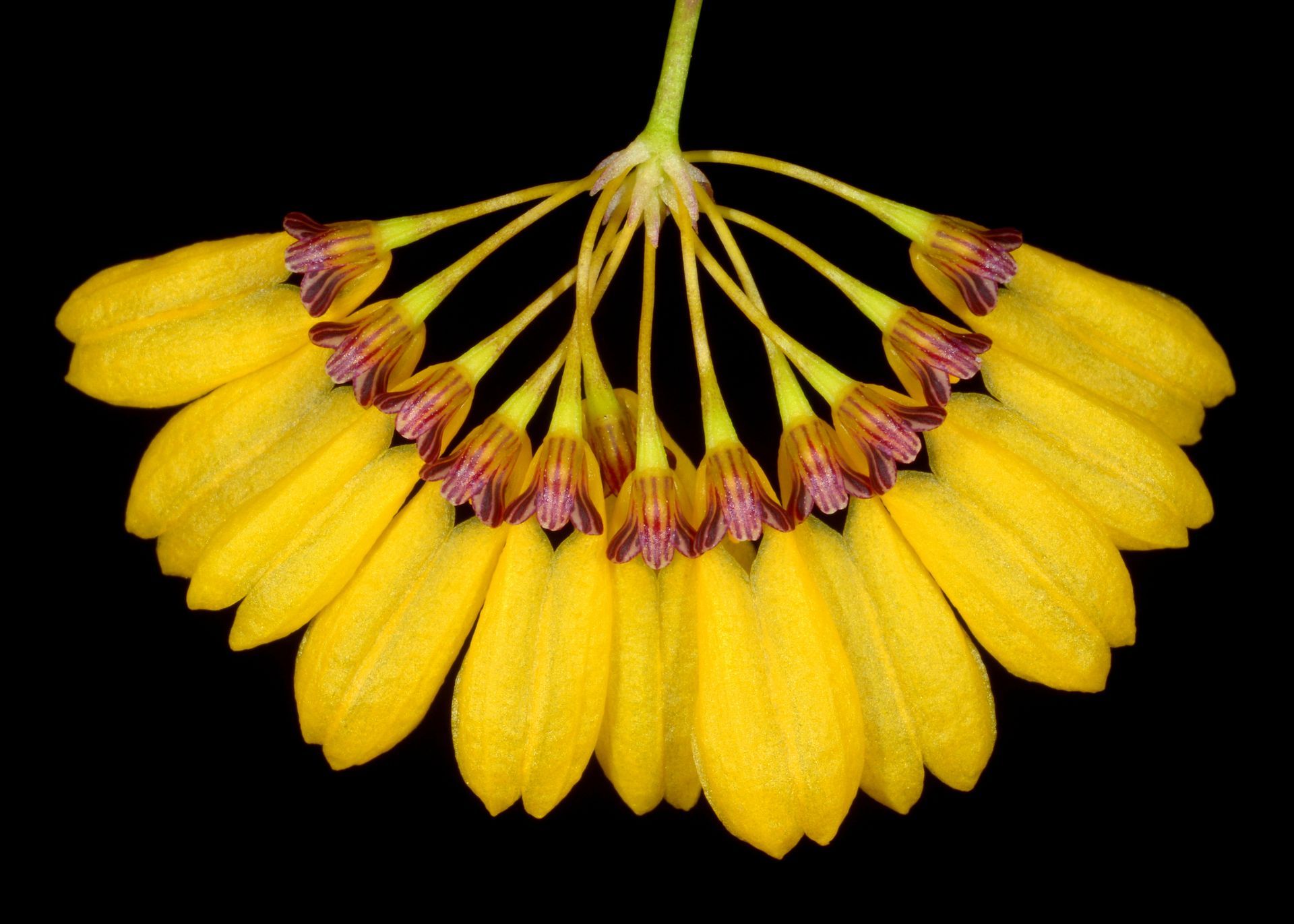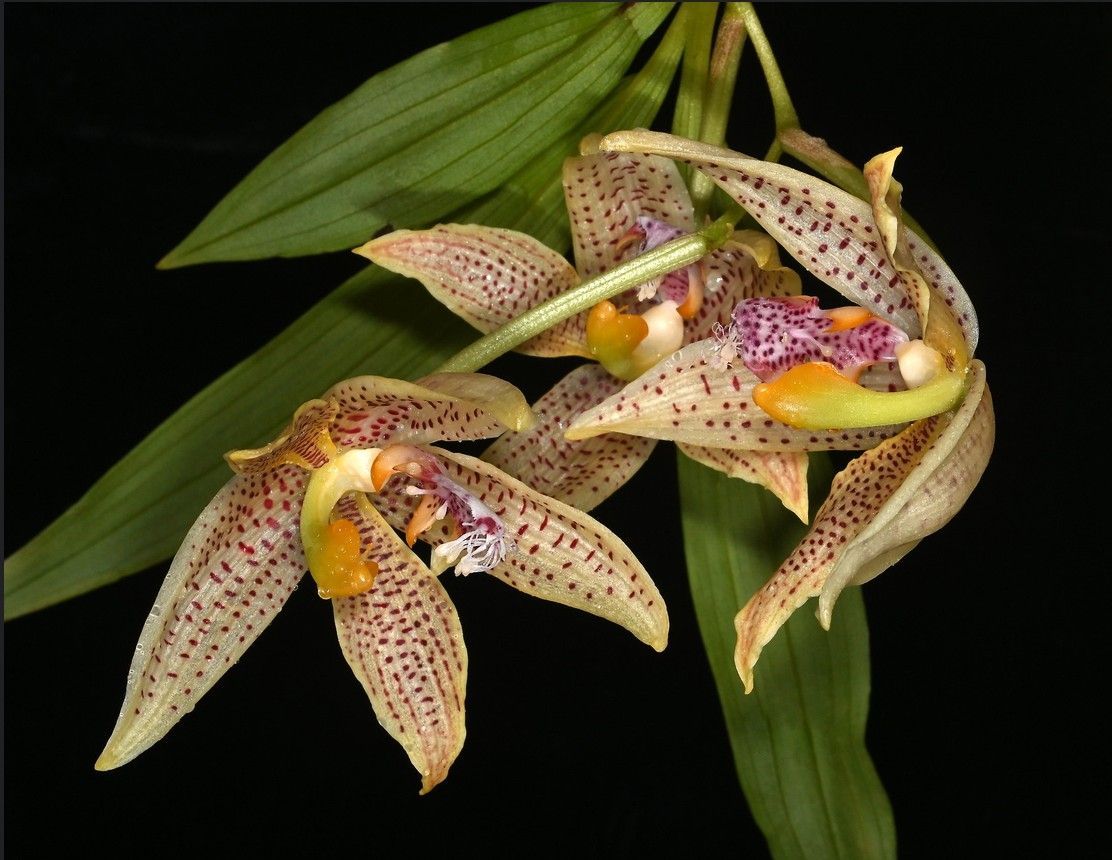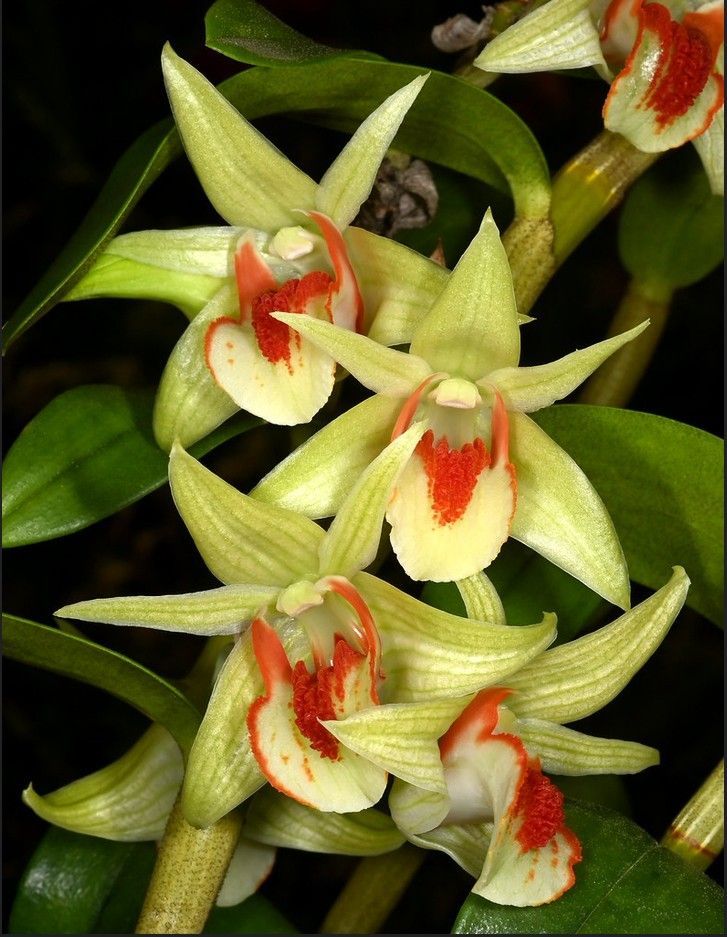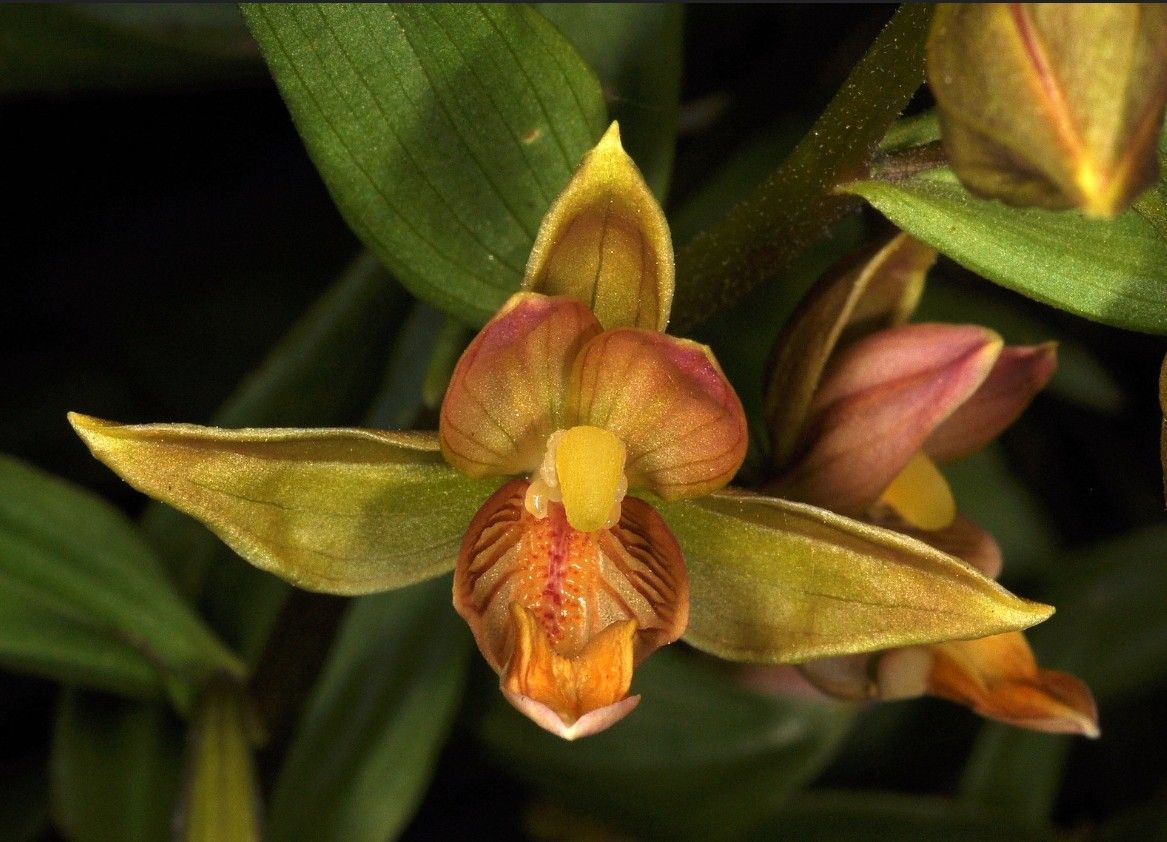
Ornithocephalus ciliates

January 31, 2022

Ornithocephalus ciliates
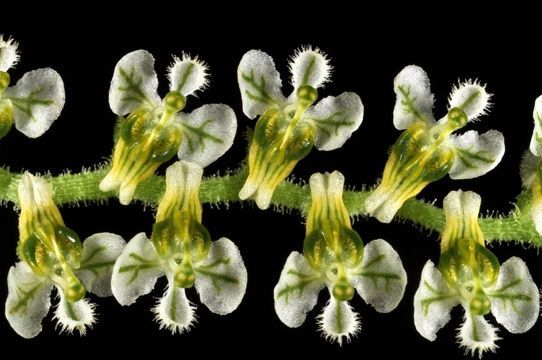


 Photographer ©Ron Parsons, grown by Mary Gerritsen

The Orchid Digest Back Cover 86-1

Ornithocephalus ciliatus Lindl., Ann. Nat. Hist. 4: 383 (1840)

  Ornithocephalus ciliatus is a twig epiphyte growing on old citrus trees and shrubs in montane rain forests. As you can imagine, growing on a twig would result in low water and nutrient availability that would limit growth and hence a tiny orchid. Studies have shown that the twig epiphytes have higher growth rates allowing them to reach sexual maturity in less than a year. Survival of the species, perhaps? These twig epiphytes present anatomical and physiological adaptations (deciduous leaves and modified cells in the velamen of the root, among others) that allow them to survive in this stressful environment

It is found in Trinidad, Venezuela, Brazil, Colombia, Ecuador, Peru, and Bolivia between 200 and 2,200 meters (656 and 7,218 feet). The flowers bloom on an erect, 1 1/4″ [3 cm] long inflorescence with several flowers in the fall. The flowers are 1/8 inch (4 mm).

It is a hot to cool growing species best mounted on cork, tree fern, or wood. Shady, humid conditions are required with even,  year-round watering.

Heterotypic Synonyms:

References:

Chase, M. W. 1987. Obligate twig epiphytism in the Oncidiinae and other neotropical orchids.    Selbyana 10: 24–30.

Chase, M. W., L. Hanson, V. A. Albert, W. M. Whitten, and N. H. Williams. 2005. Life, history,      evolution, and genome size in subtribe Oncidiinae (Orchidaceae). Annals of Botany 95:    191–199.

Mondragon, Demetria & Maldonado, Citlalli & Aguilar, Remedios. (2007). Life History and         Demography of a Twig Epiphyte: A Case Study of Erycina crista-galli (Orchidaceae). Selbyana. 28. 137-144. 10.2307/41760304.

Phal, Jay. Internet Orchid Species Encyclopedia (IOSPE). Internet Orchid Species Photo     Encyclopedia: http://www.orchidspecies.com/ornitkrugeeri.htm

World Checklist of Selected Plant Families: https://wcsp.science.kew.org/prepareChecklist.do?checklist=selected_families%40%40028280120221944474

The post Ornithocephalus ciliates appeared first on Orchid Digest.
By Sandra Svoboda January 24, 2026
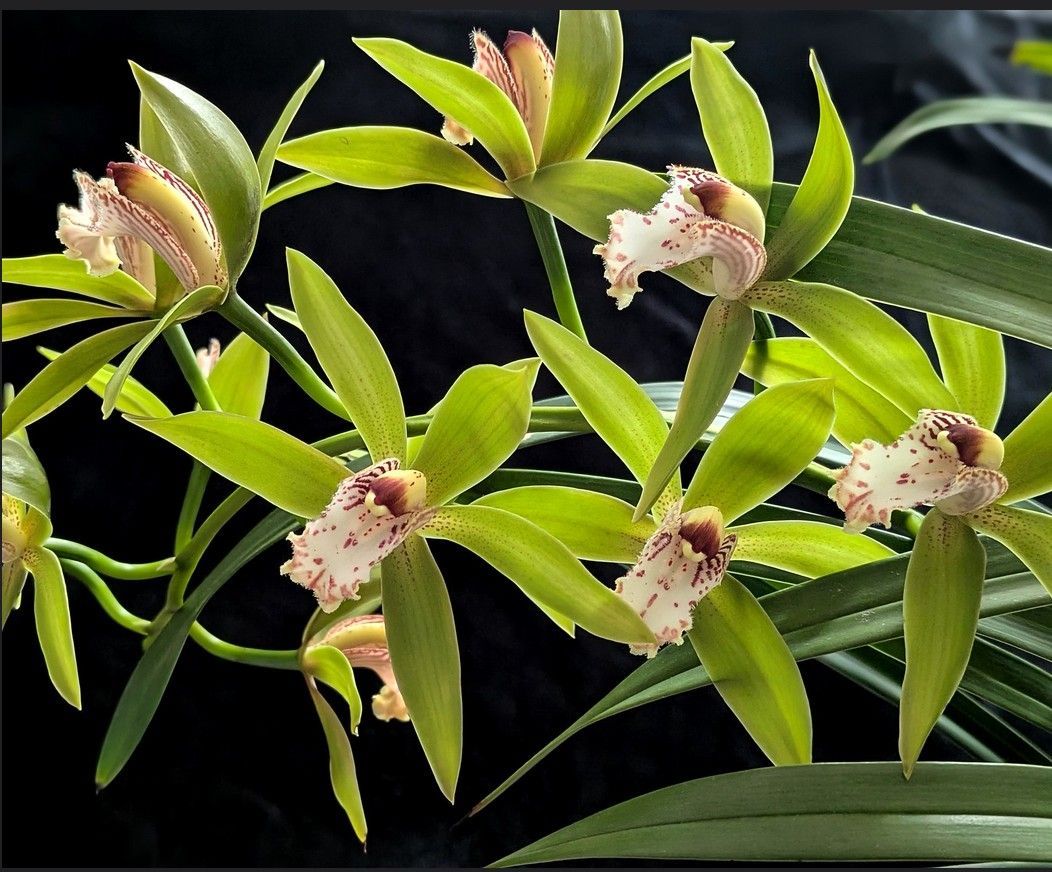
Coelogyne usitana is endemic to the Philippines at elevations around 800 meters (2,625 feet) as a small- to medium-sized, hot to warm growing epiphyte or lithophyte that blooms at any time of the year but mostly from spring to summer. It has received 15 AOS awards, including an FCC. Photo: Ron Parsons (www.flickr.com/photos/rpflowershots Grower: Brookside Orchids and Cindy Hill Info: Internet Orchid Species Photo Encyclopedia www.orchidspecies.com
By Sandra Svoboda January 22, 2026
Platystele repens 'Joan' CCE/AOS is found in Belize and Guatemala in lowland forests at elevations of 300 to 1,000 meters (984 to 3,281 feet) as a miniature-sized, hot- to warm-growing epiphyte that blooms in the summer and fall. It should be placed in small pots and kept moist with steady watering throughout the year. Photo: Ron Parsons (www.flickr.com/photos/rpflowershots Grower: Mary Gerritsen Info: Internet Orchid Species Photo Encyclopedia www.orchidspecies.com
By Sandra Svoboda January 21, 2026
Dendrobium annae is found from Sumatra to Java, a medium- to giant-sized, hot- to warm-growing epiphyte blooms in the fall with short-lived flowers. Use a quick-draining medium. Let it get slightly dry in the winter, but not a complete winter rest. Photo: Ron Parsons (www.flickr.com/photos/rpflowershots Grower: Hanging Gardens Info: Internet Orchid Species Photo Encyclopedia www.orchidspecies.com
By Sandra Svoboda January 13, 2026
Aerides magnifica is endemic to the Philippines at elevations up to 300 meters as a medium-sized, hot-growing epiphyte that blooms in the late summer and early fall with sweetly scented flowers. Provide it with bright, indirect light (near full sun is tolerated), warm temperatures, high humidity, and excellent air movement. Photo: Ron Parsons Grower: Brookside Orchids Info: Internet Orchid Species Photo Encyclopedia www.orchidspecies.com
By Sandra Svoboda January 11, 2026
The body content of your post goes here. To edit this text, click on it and delete this default text and start typing your own or paste your own from a different source.
By Sandra Svoboda January 8, 2026
Laelia anceps is found in Guatemala, Honduras, and Mexico in coffee plantations, pastures, oak and oak/pine forests with a solitary leaf in tall, scattered oaks, or on rocks below them, or in pastures and coffee plantations, often in full sunlight, at elevations of 500 to 1,500 meters (1,640 to 4,921 feet). It blooms from autumn to spring with vanilla-scented, long-lasting flowered inflorescence Photographer: Ron Parsons (www.flickr.com/photos/rpflowershots Grower: Yunor Peralta Internet Orchid Species Photo Encyclopedia www.orchidspecies.com
By Sandra Svoboda January 5, 2026
Caladenia alata is native to New South Wales, New Zealand North, Queensland, Tasmania, and Victoria as a terrestrial in forest, coastal scrub, and heathlands at elevations of sea level to 250 meters (820 feet). It is a miniature-sized plant that blooms in the spring with short-lived flowers. Photographer: Ron Parsons (www.flickr.com/photos/rpflowershots Internet Orchid Species Photo Encyclopedia www.orchidspecies.com
By Sandra Svoboda December 12, 2025
Dendrobium moorei is endemic to Australia. It is found on rocks, tree ferns, scrub, figs, and palms, as well as in the soil. They are most often found low on trees where light is relatively high. Although plants are more common above 1000 feet (300 meters), some are reported as low as 100 feet (30 meters). Collectors indicate that the best plants grow on tree ferns. A well-grown plant is usually in bloom. Water and fertilizer should be reduced, but never allow the plants to remain completely dry for long periods. Photographer: Ron Parsons (www.flickr.com/photos/rpflowershots Grower: Michael Matthews Info: Charles Baker culture sheet www.orchidculture.com
By Sandra Svoboda December 11, 2025
Dendrobium leporinum is found in the Moluccas and western New Guinea. No habitat elevation is available. Photographer: Ron Parsons (www.flickr.com/photos/rpflowershots Grower: Randy Peterson Info: Charles Baker culture sheet www.orchidculture.com
By Sandra Svoboda December 7, 2025
Dendrobium lasianthera