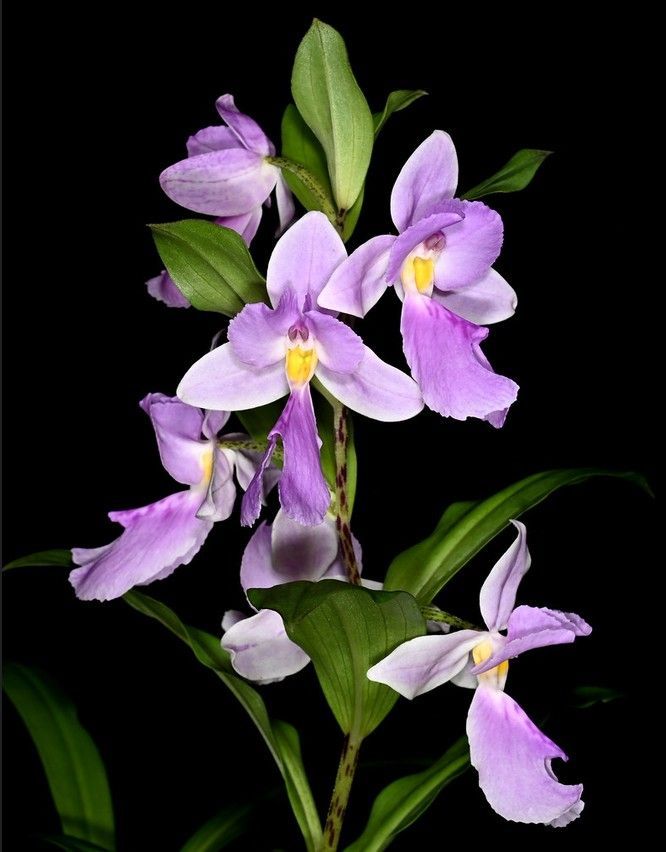
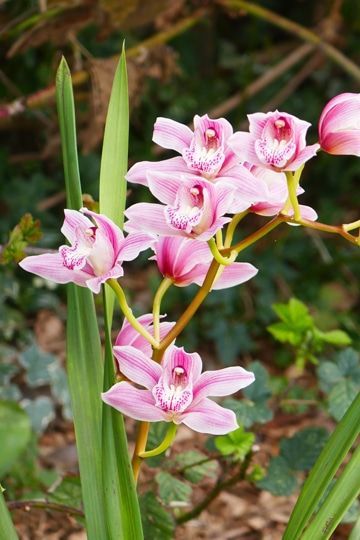
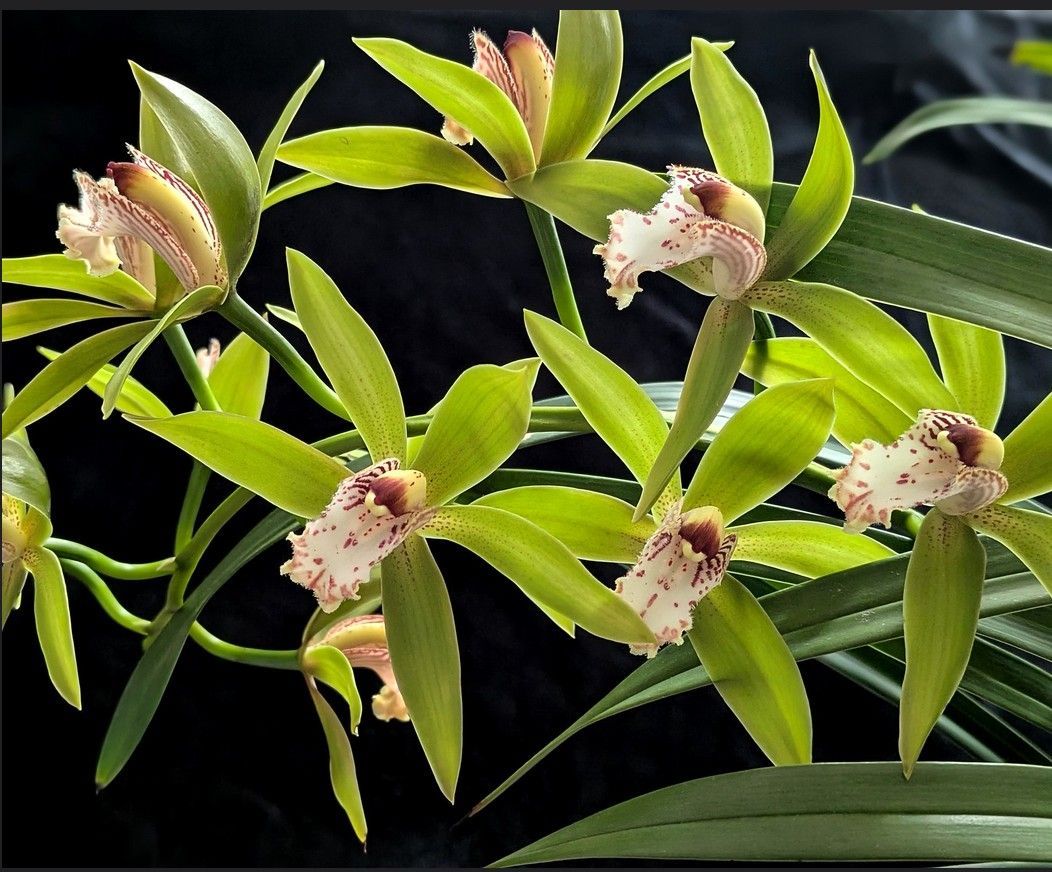
Cymbidium insigne

January 31, 2022

Photographer ©Phil Cribb

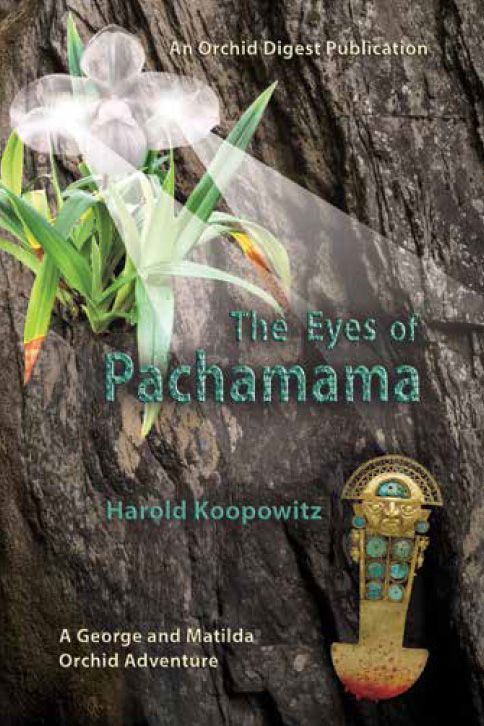
The Orchid Digest Front Cover 85-4

Cymbidium insigne Rolfe, Gard. Chron., ser. 3, 35: 387 (1904)


Cymbidium insigne is found in southern and central Vietnam throughout most of this mountainous region, particularly the Lang Bian Mountains near Dalat. Seidenfaden (1993) also reported collections from near Chapa in extreme northern Vietnam near the border with China. Plants also occur in the Loei region of northeast Thailand and on Hainan Island, just off the coast of southern China and northern Vietnam. Plants grow in sandy soils of open woodlands at 2,450 to 5,600 feet (750 to 1,700 meters). In Thailand, Cymbidium insigne is found at higher elevations, usually about 4,000 to 5,000 feet (1,220 to 1,520 meters). It blooms in the fall through spring with many flowers. It can have as many as 27 flowers.


To grow Cymbidium insigne, the light should be somewhat filtered or diffused, and strong air movement should be provided at all times. Summer temperatures average around 76oF (24oC) during the day at night 61oF (9oC). Water often when actively growing and gradually frequency after the new growths have matured in the autumn but should never stay completely dry for long periods. The media would drain quickly, so it does not become stale or soggy. Plants should usually be repotted every two years and done in late winter when the new root growth begins. Handle the new roots carefully. They are brittle and can break easily.


Cymbidium insigne has 129 first-generation offspring (a cross directly with insigne) and 16,708 progeny (where insigne is in the background).


Homotypic Names:


  • Cyperorchis insignis (Rolfe) Schltr., Repert. Spec. Nov. Regni Veg. 20: 108 (1924).


Heterotypic Synonyms:


  • Cymbidium sanderi O’Brien, Gard. Chron., ser. 3, 37: 115 (1905).
  • Cymbidium insigne var. sanderi O’Brien, J. Roy. Hort. Soc. 58: 415 (1909).
  • Cymbidium insigne var. album O’Brien, Gard. Chron., ser. 3, 58: 101 (1915).
  • Cymbidium insigne f. album (O’Brien) O.Gruss & M.Wolff, Orchid. Atlas: 97 (2007).


References:

By Sandra Svoboda February 28, 2026
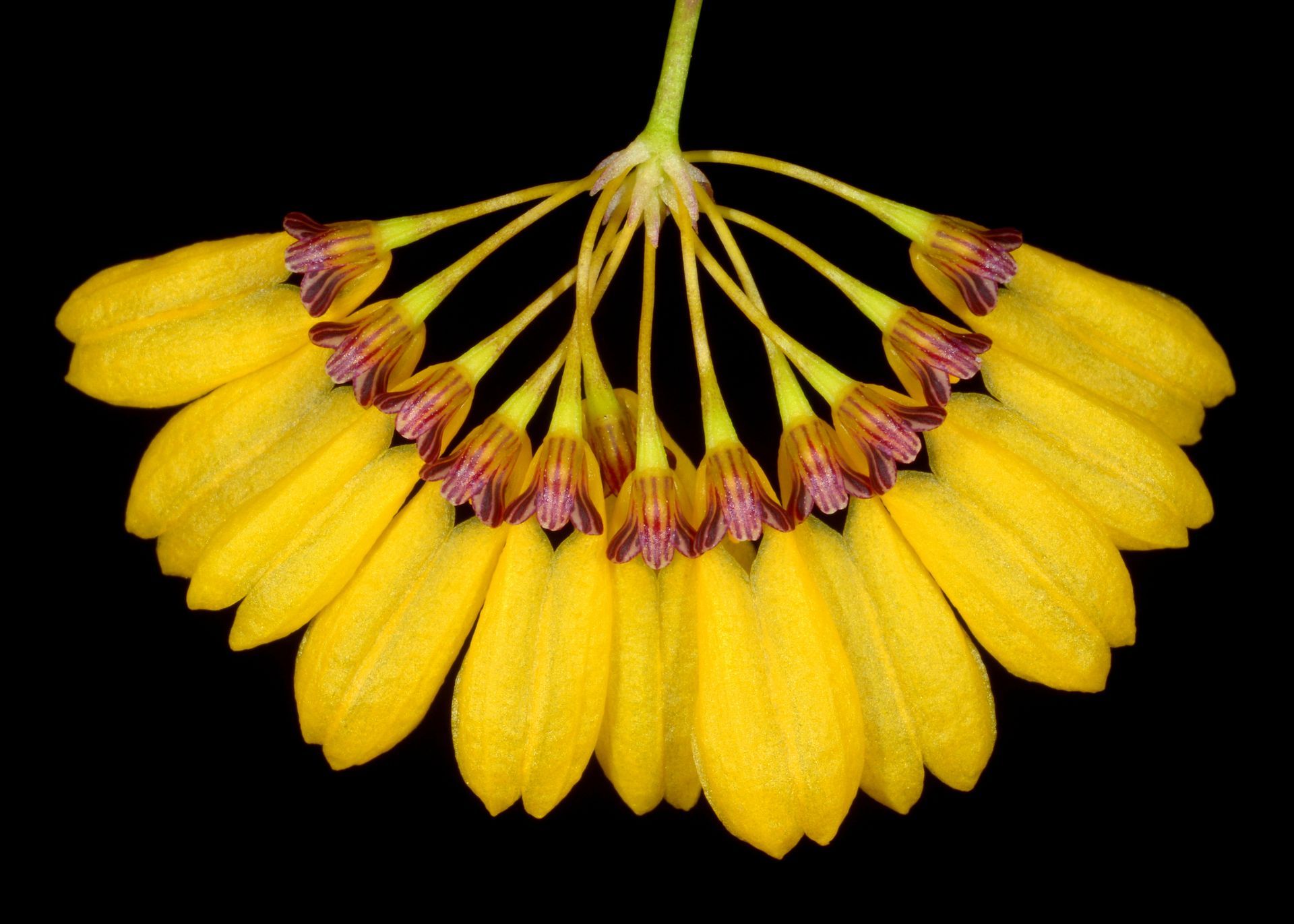
Bulbophyllum ambrosia occurs in China and Vietnam as an epiphyte or lithophyte where it grows in mossy, primary and secondary, evergreen and semideciduous, broad-leaved, mixed, and coniferous forests, which are growing on weathered limestone and in mountain forests as well, at 500 to 1,300 meters (1,650-4,250 feet). It blooms from late winter into spring. Photographer: Ron Parsons (www.flickr.com/photos/rpflowershots Grower: Brookside Orchids Information: Charles Baker culture sheet www.orchidculture.com
By Sandra Svoboda February 26, 2026
Masdevallia striatella is found in Costa Rica, Panamá, and Venezuela in lower montane cloud forests at 1.000 to 2400 meters (3,300 to 6,550 feet) and blooms in the fall and early winter. This species grows well in cultivation, often producing flowers in profusion Photographer: Ron Parsons (www.flickr.com/photos/rpflowershots Grower: Dug Kubo Information: Charles Baker culture sheet www.orchidculture.com
By Sandra Svoboda February 19, 2026
The body content of your post goes here. To edit this text, click on it and delete this default text and start typing your own or paste your own from a different source.
By Sandra Svoboda February 18, 2026
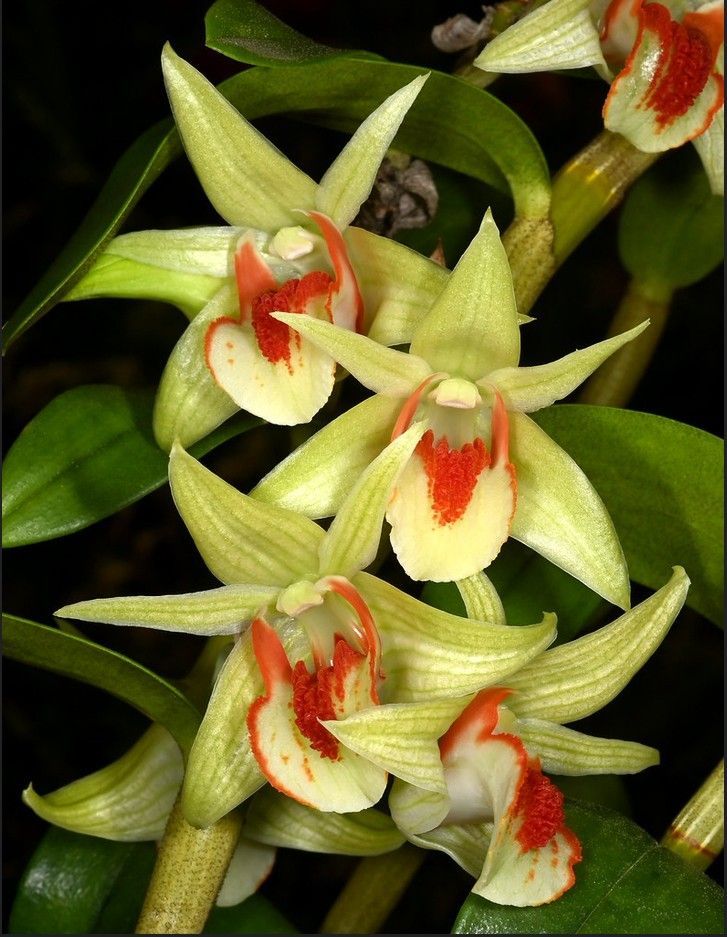
Coelogyne fusca (syn. Otochilus fuscus) is found in China, Assam, eastern Himalayas, Nepal, Myanmar, Thailand, Cambodia, and Vietnam on subtropical jungle slopes on old tree trunks at elevations of 780 to 2,500 meters (2,559 to 8,202 feet) as a small-sized, warm to cold growing epiphyte that blooms in the fall to spring with fragrant flowers. It is best grown in a well-draining medium in a hanging basket. Photographer: Lourens Grobler of Afri Orchids https://afriorchids.co.za/ Info: Internet Orchid Species Photo Encyclopedia www.orchidspecies.com
By Sandra Svoboda February 15, 2026
Specklinia tribuloides is found in Mexico, Belize, Guatemala, Nicaragua, Costa Rica, and the West Indies at 600 to 4250 feet (180 to 1,300 meters. It grows epiphytically in dense, damp forests and blooms normally in spring and summer, but it may bloom in any season. Water and fertilizer should be reduced in winter but not allowed to dry out. It is best grown in small pots or baskets in an open, fast-draining medium. Photographer: Ron Parsons (www.flickr.com/photos/rpflowershots Grower: Mary Gerritsen Info: Charles Baker culture sheet www.orchidculture.com
By Sandra Svoboda February 11, 2026
Bulbophyllum comosum is found from Myanmar to Thailand at elevations of 1,850 to 2,000 meters (6,070 to 6,562 feet) as a small-sized, cool-growing epiphyte. It is deciduous, and the leaves fall just before blooming, which occurs in the winter with fragrant (cinnamon) flowers. Photographer: Ron Parsons (www.flickr.com/photos/rpflowershots Grower: John Leathers Info: Internet Orchid Species Photo Encyclopedia www.orchidspecies.com
By Sandra Svoboda February 5, 2026
Dresslerella is a genus that has 14 species accepted according to the Kew Plants of the World Online. Dresslerella lasiocampa is endemic to Ecuador at elevations of 1,500 to 1,800 meters (4,921 to 5,906 feet) as a miniature-sized, cool-growing epiphyte that blooms in the spring. It grows on the trunks of old trees with full exposure to the sun. This is possibly the most widely cultivated species in the genus. Grow mounted with Sphagnum moss around the roots. Keep moist, well-drained, but not wet. Photographer: Ron Parsons (www.flickr.com/photos/rpflowershots Grower: John Leathers Info: “A Compendium of Miniature Orchid Species: by Parsons & Gerritsen, p. 784
By Sandra Svoboda February 1, 2026
Lepanthes felis is endemic to Colombia in cloud forests at elevations of 1,900 to 2,500 meters (6,234 to 8,202 feet) as a miniature-sized, cool- to cold-growing epiphyte that blooms in the late spring and summer. This species needs high humidity, constant watering, and fertilizer. Lepanthes felis readily produces keikis on the inflorescence. Photographer: Ron Parsons (www.flickr.com/photos/rpflowershots Grower: Doug Kubo and Ron Parsons Info: Internet Orchid Species Photo Encyclopedia www.orchidspecies.com
By Sandra Svoboda January 29, 2026
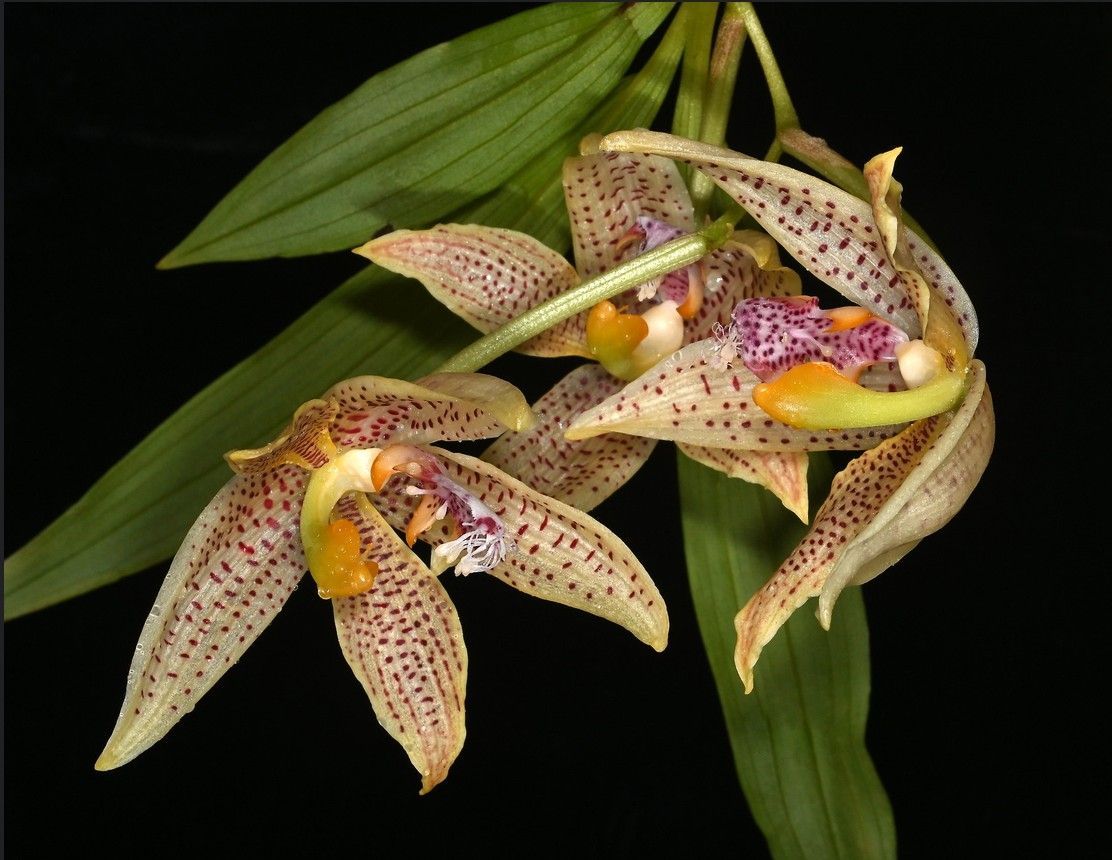
Maxillaria pseudoneglecta is found in Costa Rica and western Panama in premontane and montane forests at elevations above 900 meters (2,953 feet) as a small-sized, warm- to cool-growing epiphyte that blooms in the late spring through fall. Photographer: Ron Parsons (www.flickr.com/photos/rpflowershots Grower: Andy’s Orchids (andysorchids.com) Info: Internet Orchid Species Photo Encyclopedia www.orchidspecies.com
By Sandra Svoboda January 27, 2026
Dendrobium rigidum is found in Australia and New Guinea. Plants usually grow on mangroves in swampy coastal lowlands in New Guinea and commonly grow in mangrove swamps but are also found on trees along creeks and on rock faces and ironbark trees in low mountains and dry savannas, sometimes considerably inland from the coast in Australia. They grow from sea level to 2,300 feet (0 to 700 meters). It blooms sporadically during the year and usually blooms several times, with the main flowering in spring. It is a very slow-growing species. It is best grown mounted, but it can be in a shallow bulb pan or hanging basket. Do not use sphagnum moss. Air movement is critical. Repot in the spring. Photo: Ron Parsons (www.flickr.com/photos/rpflowershots Grower: John Snyder Info: Charles Baker culture sheet www.orchidculture.com