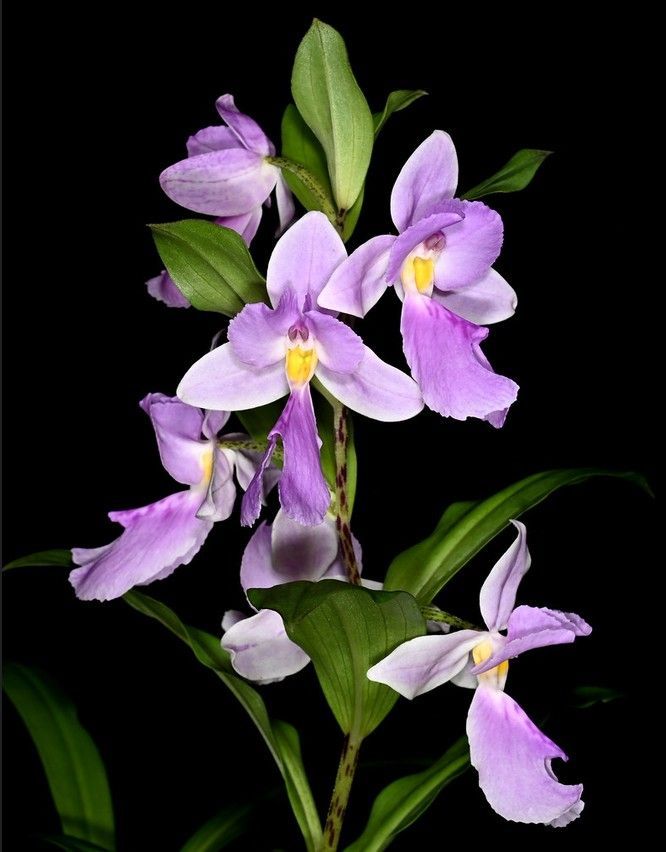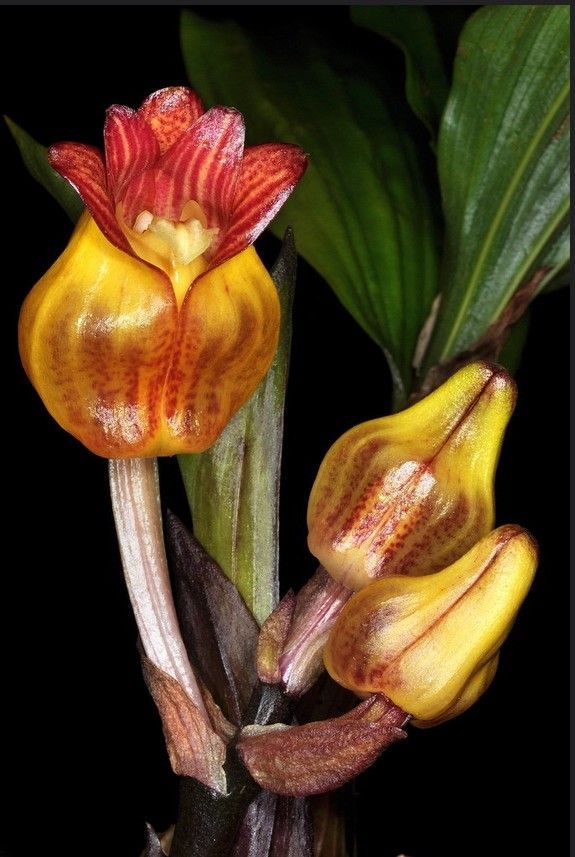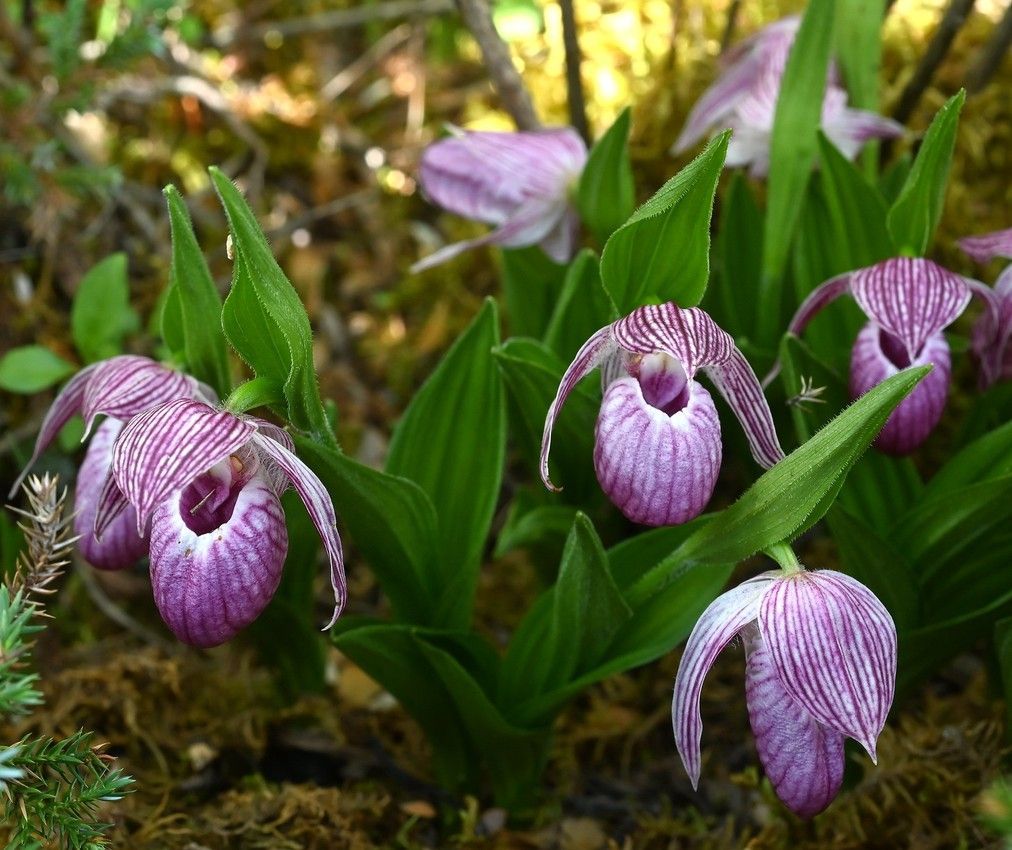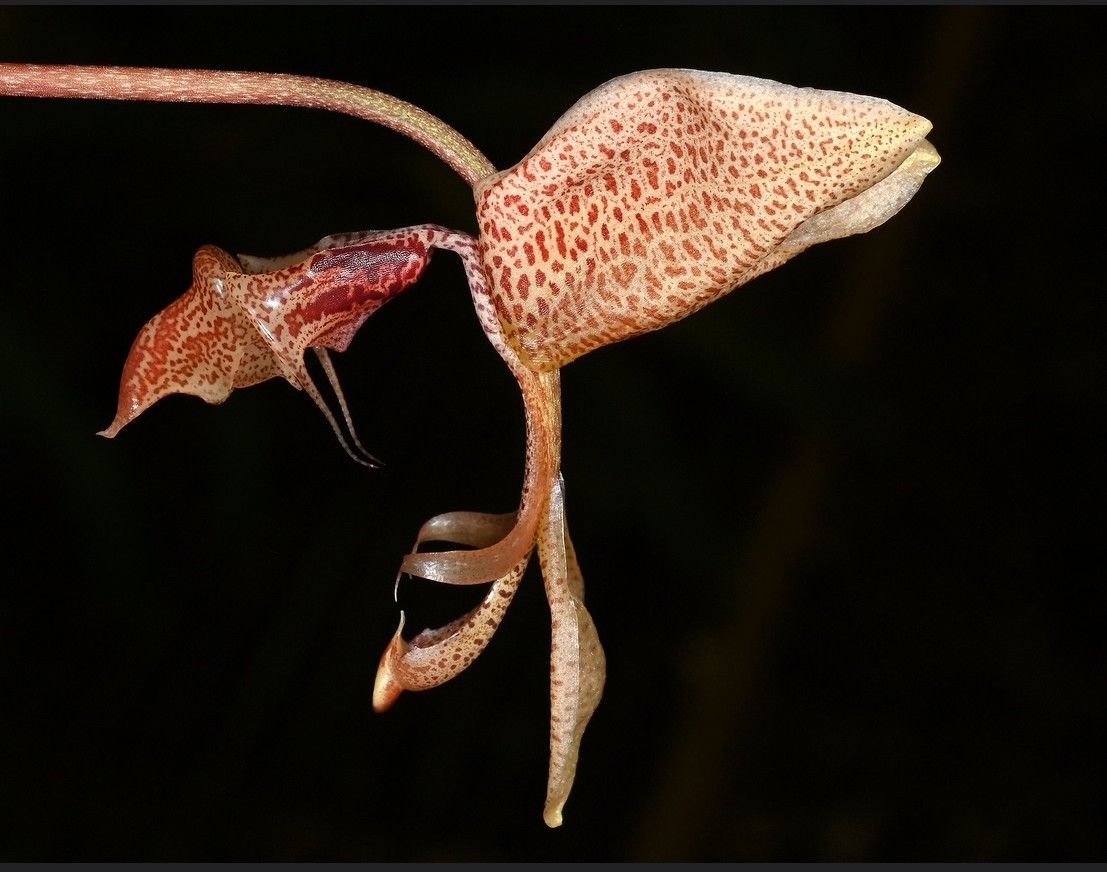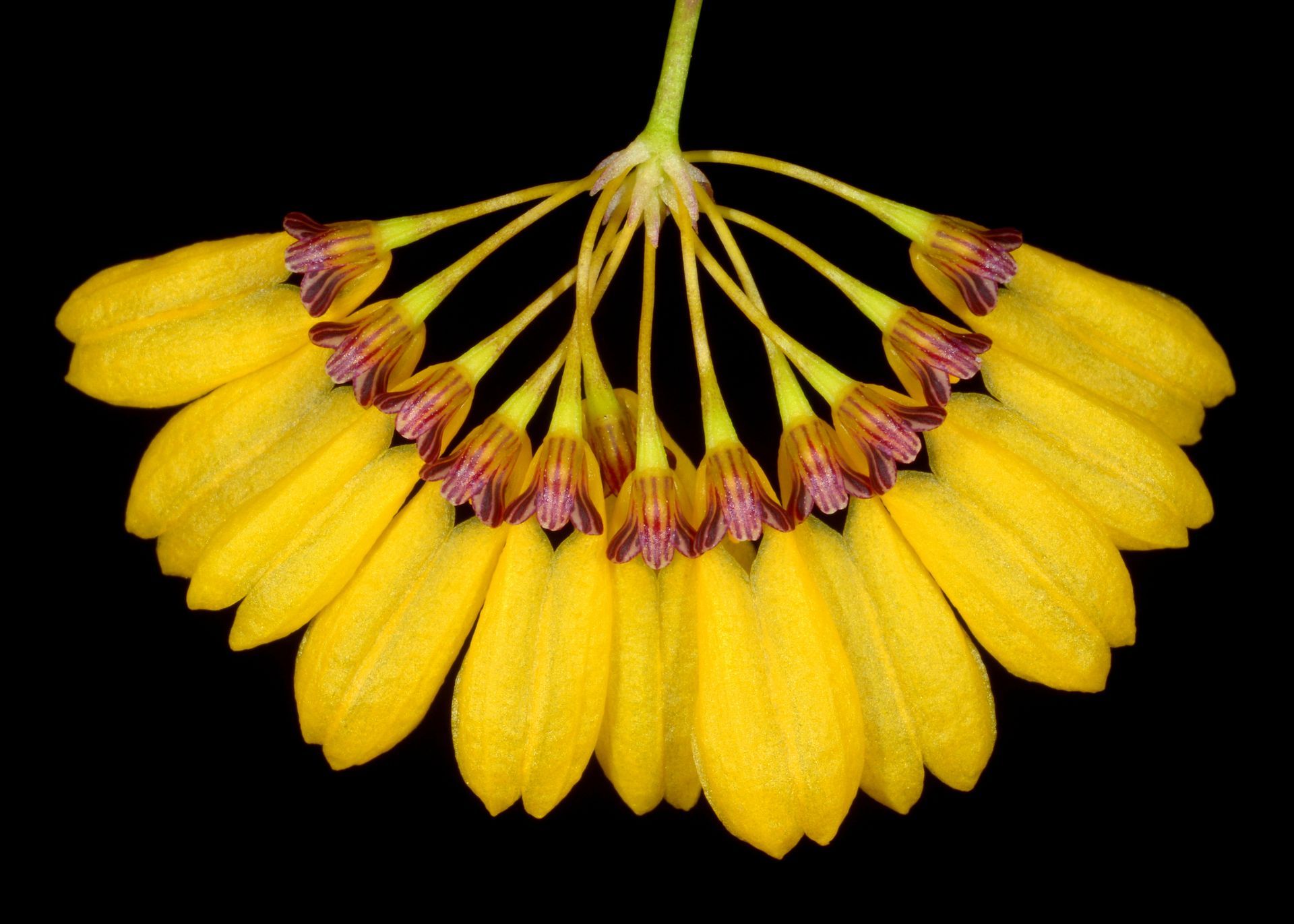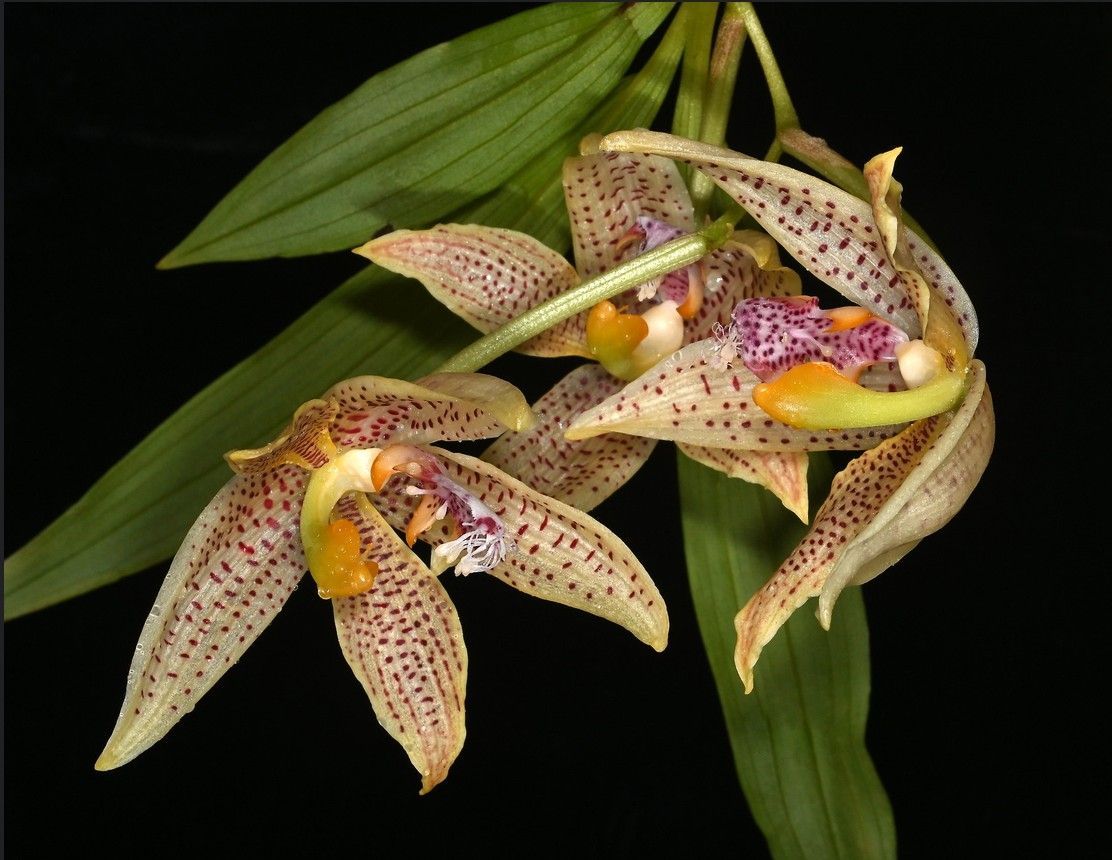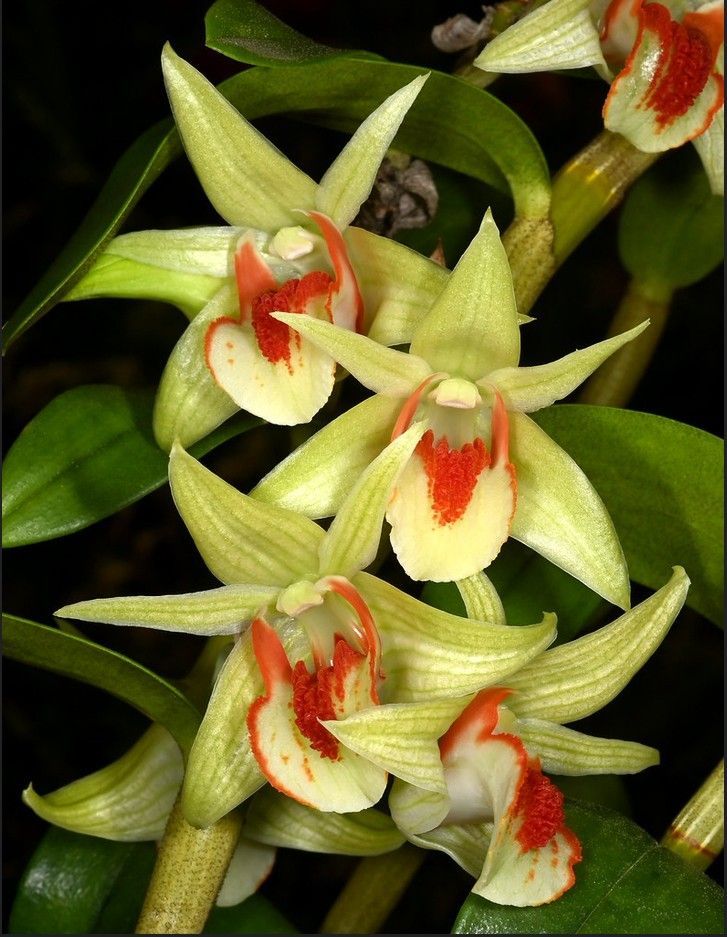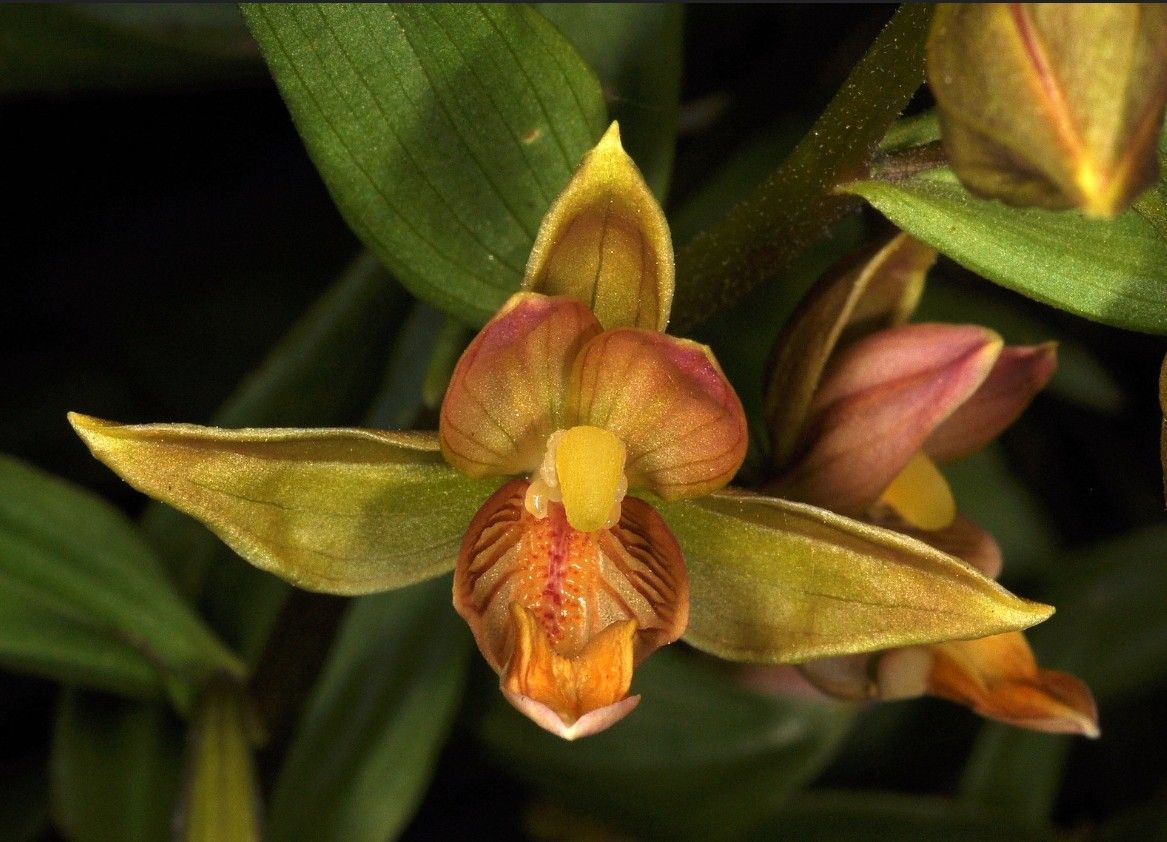
Sarcochilus falcatus
November 29, 2025
Sarcochilus falcatus
Sarcochilus falcatus is endemic to Australia and found from 100 to 1,400 meters (328 to 4,593 feet) on rainforest trees with exposure to fairly bright light and strong air movement. These plants, which grow in areas that are always very moist, are often found near gorges and ridge tops where winds and updrafts laden with clouds, mist, and drizzle are common. They appear to be found most frequently in areas in which the soil and rocks are of volcanic origin. The strongly fragrant blossoms open in the spring and last 2-3 weeks. They have an odor described as somewhat like vanilla.
Photographer: Ron Parsons (www.flickr.com/photos/rpflowershots
Grower: Mike Harrison
Info: Charles Baker culture sheet www.orchidculture.com
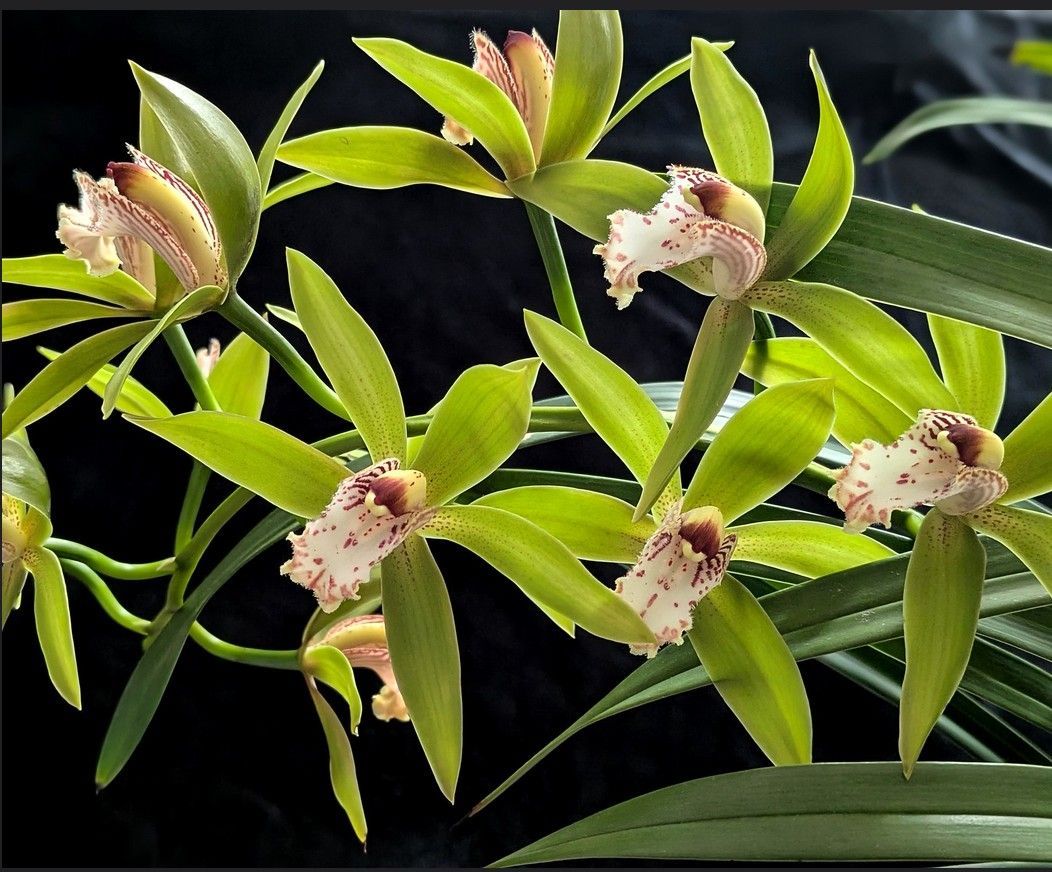
Photographer: Ron Parsons (www.flickr.com/photos/rpflowershots
Grower: Mike Harrison
Info: Charles Baker culture sheet www.orchidculture.com

Acineta is a genus with 14 accepted species. Acineta superba is found in Venezuela, Colombia, Ecuador, and Peru in seasonally dry cloud forest at 930 to 2,100 meters (3,050 to 6,900 feet. It can have from 5 to 30 large, fleshy, heavily waxy, and spicily fragrant flowers which bloom in the late winter and spring. These plants should be grown mounted or in a hanging basket to accommodate the pendant inflorescence. It should be given a short, dry winter rest. Photographer: Ron Parsons (www.flickr.com/photos/rpflowershots Grower: Orchid Species Plus Info: Charles Baker culture sheet www.orchidculture.com and Internet Orchid Species Photo Encyclopedia www.orchidspecies.com

Dendrobium limpidum is endemic to Papua New Guinea and found at 1,500 to 2,100 meters in wet, montane forests. It is a Miniature to small-sized, cool- to cold-growing epiphyte or lithophyte that blooms at most any time of the year. Photographer: Ron Parsons (www.flickr.com/photos/rpflowershots Grower: John Leathers Info: Internet Orchid Species Photo Encyclopedia www.orchidspecies.com

Orchids can be beautiful, and some can make you laugh! Have to love that about orchids! Here is one to make you smile. Calochilus campestris is a small-sized, cold-growing terrestrial from eastern Australia and New Zealand occurring in open forest and heathland in moist to well-drained soils at elevations of sea level to 500 meters that flowers in the spring and early summer. Photographer: Ron Parsons (www.flickr.com/photos/rpflowershots Taken in situ Info: Internet Orchid Species Photo Encyclopedia www.orchidspecies.com

Pecteilis radiata, formerly Habenaria radiata, is also called the White Egret Orchid. It is found in western China, Japan, and Korea in forest glades at 1,500 meters (4.921 feet) as a small- to medium-sized cold-growing terrestrial that blooms in the summer. Photographer: Ron Parsons (www.flickr.com/photos/rpflowershots Grower: Anna Chai Info: Internet Orchid Species Photo Encyclopedia www.orchidspecies.com

Dendrobium aurantiiroseum is endemic to New Guinea, growing epiphytically in loose moss in shady, mountain habitats from 2,100 to 2,250 meters (6,900 to 11,000 feet) that blooms in the winter and spring. Though beautiful, this species is reportedly very slow-growing and difficult to cultivate. Growing conditions should be maintained year-round. Photographer: Ron Parsons (www.flickr.com/photos/rpflowershots Grower: John Leathers Info: Charles Baker culture sheet www.orchidculture.com

Dendrobium subuliferum is endemic to New Guinea, growing epiphytically in primary and secondary forests at 300 to 2,000 meters (1,000 to 6,550 feet) but occasionally grows on the surface of the ground in shady, moss-covered locations. The sometimes fragrant flowers occur in the fall through spring. May be potted in sphagnum moss over bark or mounted. Repot any time new roots are growing. Photographer: Eric Hunt Grower: Marni Turkel Info: Charles Baker culture sheet www.orchidculture.com and Internet Orchid Species Photo Encyclopedia www.orchidspecies.com

Masdevallia angulifera is endemic to Colombia and found in cool, moist, cloud forests at 1,800 to 2,000 meters (5,900 to 6,550 feet). It blooms in the winter through spring with fragrant flowers that can last up to three months. It should be potted in an open, fast-draining medium with some material to retain some moisture. Repotting is done every year in the late winter or early spring, or may be done anytime between autumn and spring, that does not interfere with flowering. Photographer: Eric Hunt Grower: Ron Parsons Info: Charles Baker culture sheet www.orchidculture.com and Internet Orchid Species Photo Encyclopedia www.orchidspecies.com

Rhyncholaelia digbyana (formerly known as Brassavola digbyana) is found in the southeastern Mexican states of Yucatan and Quintana Roo, with distribution extending through the Caribbean-facing lowlands of Belize into Honduras from 10 to 1,000 meters (33 to 3,281 feet). They grow on stunted trees in hot, humid lowlands near sea level. Often found in large colonies, it blooms in summer with large, fragrant flowers. This species does best mounted on wood or tree fern, given plenty of bright light and ample water while growing, and a lessening after the bulbs have matured. This plant, “Quinnelly’s Joy’ has both an AM and CCE awarded by the American Orchid Society. Photographer: Wes Newton Grower: Patti Quinnelly Info: Charles Baker culture sheet www.orchidculture.com and Internet Orchid Species Photo Encyclopedia www.orchidspecies.com

Masdevallia ova-avis is endemic to Ecuador, where plants grow on the western slopes in northwest Ecuador at 2.000 meters (6,500 feet) in dense cloud forests and on steep road embankments. It is a medium- to large-sized epiphyte or terrestrial that blooms with flowers that have a spicy perfume. It blooms in winter, spring, and summer. Water and fertilizer should be reduced somewhat in the winter but never allow them to dry out completely. Photographer: Eric Hunt https://www.flickr.com/search/?user_id=39312862%40N00&safe_search=3&view_all=1&text= Grower: Hanging Gardens Info: Charles Baker culture sheet www.orchidculture.com

Masdevallia exquisita is endemic to Bolivia, and the plants were found in trees found along a ravine or gorge at 1,800 meters (5,900 feet). The plant blooms in the summer. Water and fertilizer should be reduced in the winter, but do not allow them to dry out completely. Medium should be open and fast draining, with some materials added to retain some moisture. Photographer: Eric Hunt https://www.flickr.com/search/?user_id=39312862%40N00&safe_search=3&view_all=1&text=Masdevallia+exquisita Grower: Golden Gate Orchids Info: Charles Baker culture sheet www.orchidculture.com